

TOP 10 mistakes on a laser cutting machine that can “kill” your business
- TOP 10 Mistakes That Can Occur When Working with Laser Cutting Machines
- Incorrect cutting parameter settings
- Insufficient maintenance and cleaning of equipment
- Use of low-quality or unsuitable metals
- Failure to follow safety requirements and insufficient staff training
- Lack of regular equipment inspection and calibration
- Overloading the machine
- Incorrect material setup and clamping
- Ignoring error messages and using incompatible software
- Lack of regular professional maintenance
- Conclusion
Why doesn’t your laser cutting machine deliver perfect results? Why does the metal overheat, leave slag, or fail to cut through completely? How can you avoid equipment downtime and reduce maintenance costs?
This article will help you understand the most common mistakes when working with a laser cutting machine and teach you how to avoid them. Use this knowledge to improve production efficiency and prevent equipment failures.
Let’s take a closer look at each of the common mistakes in working with laser metal cutting machines and how to avoid them.
TOP 10 Mistakes That Can Occur When Working with Laser Cutting Machines
Incorrect cutting parameter settings
The accuracy of cutting parameters such as laser power, feed rate, and focal distance is critical to achieving high-quality results. Incorrect settings can lead to poor cutting quality, material waste, or even damage to the laser source.
How to avoid this mistake:
Follow the manufacturer’s recommendations: Always use the cutting parameters recommended by the manufacturer for each material type. This ensures optimal cutting quality and extends the service life of the equipment.
Perform test cuts: Before starting serial production, carry out test cuts on sample material. This helps identify and correct any deviations in the settings.
Regularly check the focal distance: Ensure the focal distance is set according to the material’s thickness and type. Incorrect focusing can reduce cutting quality and increase the risk of equipment damage.
Insufficient maintenance and cleaning of equipment

Accumulation of dust, metal residues, and other contaminants
The accumulation of dust, metal residues, and other contaminants on optical elements and internal components of the machine can reduce laser efficiency and lead to overheating.
How to avoid this mistake:
Regular cleaning of optics: Clean lenses, mirrors, and other optical components according to the manufacturer’s instructions. Use appropriate cleaning agents and tools to avoid damaging the surfaces.
Technical maintenance: Follow the scheduled maintenance plan, including checking and replacing worn parts, cleaning the cooling system, and inspecting electrical connections.
Filter monitoring: Regularly inspect and replace filters in ventilation and cooling systems to ensure proper airflow and prevent overheating.2
Use of low-quality or unsuitable metals
Using low-quality materials or materials with defects, such as corrosion or heavy contamination, can lead to an unstable cutting process, increased wear of the equipment, and poor final product quality.
How to avoid this mistake:
Incoming material inspection: Check materials for defects such as corrosion, cracks, or contamination before starting work. Only use materials that meet the established quality standards.
Proper material storage: Ensure that metals are stored under suitable conditions to prevent damage or contamination. Avoid exposure to moisture, dust, and aggressive chemicals.
Failure to follow safety requirements and insufficient staff training

The most common mistake in production is insufficient staff training, which can negate the entire effectiveness of the laser cutting machine. Ignoring safety rules and poor operator preparation can result in injuries, equipment damage, and even a complete shutdown of production.
How to avoid this mistake:
- Staff training: Provide mandatory training for operators and maintenance personnel before they start working with the laser machine. This should cover correct equipment usage, cutting parameter adjustments, and safety procedures. After training, staff should pass a knowledge check before being allowed to work independently.
- Use of personal protective equipment: Ensure all personnel use the necessary protective gear, including laser safety goggles, protective clothing, and gloves.
- Compliance with safety procedures: Develop and implement standardized safety procedures for all stages of work with the laser machine, including startup, setup, maintenance, and emergency situations.
Lack of regular equipment inspection and calibration
Regular calibration and verification of the laser beam’s accuracy are critical to ensuring the stable and high-quality operation of the laser cutting machine. Neglecting these procedures can result in cutting inaccuracies, increased defective output, lower production efficiency, and accelerated equipment wear.
How to avoid this mistake:
- Establish a regular calibration schedule: Create and implement a clear schedule for planned inspections and calibrations in line with the manufacturer’s recommendations. This helps maintain optimal machine performance and prevent deviations during cutting.
- Use specialized tools and qualified professionals: Calibrations should be performed with precise measuring instruments by experienced specialists. This ensures accuracy and minimizes human error.
- Document inspection results: Keep detailed records of all calibrations and inspections. This allows you to track performance trends and detect potential issues in time.
- Implement automated monitoring systems: Consider using systems that automatically track key machine parameters and notify operators when calibration or maintenance is required.
Overloading the machine
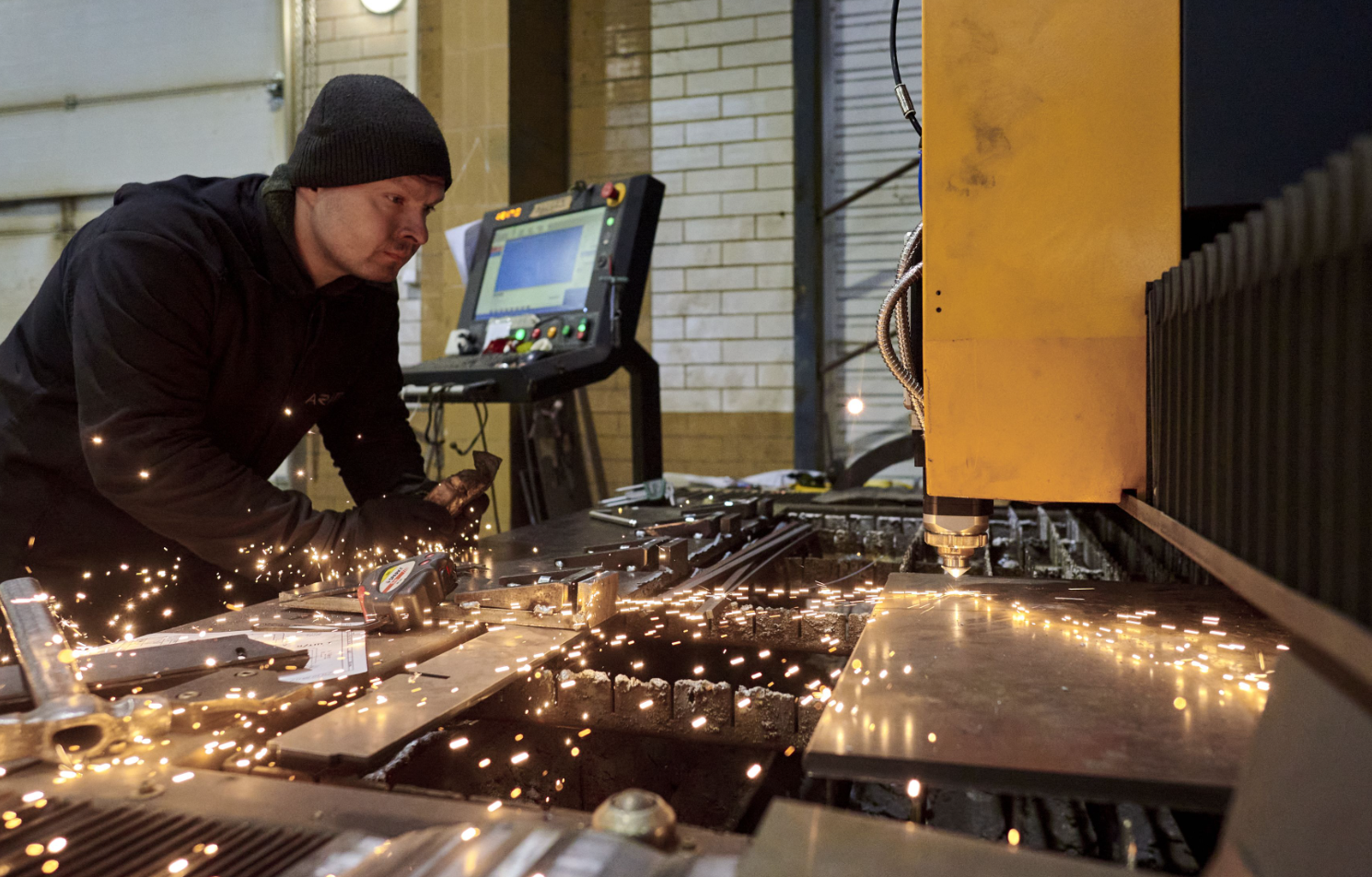
Exceeding recommended operating parameters
Exceeding recommended parameters, such as cutting speed or laser power, can lead to overheating of optical components, reduced cutting quality, and premature wear of the equipment.
How to avoid this mistake:
- Follow technical specifications: Always operate within the parameters specified by the manufacturer. Exceeding these limits can negatively affect the machine’s performance and longevity.
- Monitor temperature: Use temperature control systems to track the condition of critical components. This will help detect overheating in time and prevent possible damage.
- Plan work cycles: Develop a work schedule that includes regular cooling breaks during intensive use.
Incorrect material setup and clamping
Unreliable or improper clamping of the material on a tube cutting machine can cause it to shift during cutting, leading to inaccuracies, defects, and potential equipment damage. In the case of sheet metal cutting, clamping is generally not required.
How to avoid this mistake:
- Use appropriate clamping devices: Apply specialized fixtures to securely hold the metal tube in place during processing.
- Check before starting: Ensure the tube is firmly clamped and cannot shift during cutting.
- Account for thermal deformation: When working with thin or long parts, consider possible heat-induced deformation and apply measures to minimize it.
Insufficient cooling of the control system
Overheating of the control system’s electronic components can cause failures, machine malfunctions, and unexpected production downtime.
How to avoid this mistake:
- Regularly check the cooling system: Monitor the operation of fans and other cooling components. Clean them of dust and debris that could reduce cooling efficiency.
- Monitor temperature: Install temperature sensors on critical control system components to detect overheating early.
- Ensure proper ventilation: Make sure the machine’s environment has adequate ventilation to dissipate heat and maintain optimal working conditions.
Ignoring error messages and using incompatible software

Ignoring error messages and using incompatible software
Neglecting system error messages or using software that does not meet the machine’s specifications can lead to serious malfunctions and equipment damage.
How to avoid this mistake:
- Respond promptly to system messages: Do not ignore warnings or error notifications displayed by the system. Take immediate action to resolve them or contact technical support.
- Use official software: Only use software recommended or provided by the machine’s manufacturer. Using third-party or pirated software may lead to incompatibility issues and operational failures.
Lack of regular professional maintenance
Even with careful handling and in-house maintenance, certain aspects of laser machine operation require professional intervention. The absence of regular maintenance by specialists can result in hidden issues that may eventually cause major breakdowns and production down2time.
How to avoid this mistake:
- Scheduled professional maintenance: Sign a service contract with qualified service centers for scheduled maintenance. This helps detect and fix potential problems in time.
- Diagnostics and adjustments: Periodically perform a full diagnostic of the machine, including checking the laser source, optical system, cooling system, and electronic components.
Conclusion
Mistakes can occur during operation because a laser cutting machine is a complex mechanism that requires specialized training and experience to operate properly. It is important to pay attention to inaccuracies in time. The key is to control material quality, ensure correct settings, maintain the equipment, and train personnel properly.
If your production requires stable and precise cutting, it is essential to follow these recommendations. Only this approach will allow you to achieve high-quality metal parts and keep your equipment operating at peak performance.
If you are already facing certain issues that you cannot resolve on your own, contact our service center at the phone number listed on our website. Our specialists will gladly assist you.

At the same time, some of the visitors even managed to try to work on the equipment and clean the rust off a real part. The speed and precision of cutting, as well as the simplicity of the welding and cleaning process, has caused sincere delight not only among the students, but also among the […]

January 10, 2024 The ARAMIS company continues its successful evolution thanks to participation in the state program “eRobota” and makes investments in the development of its production. One of the grant programs of this initiative is the “New Level” program for processing enterprises, which gives entrepreneurs the opportunity to receive up to 8 million hryvnias […]

This year has been a true test for us and, at the same time, a year of great achievements. Despite challenges related to the war, unstable energy supply, and missile strikes, Aramis not only persevered but also achieved significant success, highlighting our resilience, professionalism, and innovative potential. Launch of a Joint Program with USAID to […]

XXI INTERNATIONAL INDUSTRIAL FORUM (Kiev, Ukraine) ITM INDUSTRY EUROPE 2023 (Poznań, Poland) Address: International Exhibition Center, 15 Brovarskyi prosp., Kyiv, Ukraine Stand: Pavilion 2A Place A12 The event is to be held on: May 30th – June 01st , 2023 Registration: here Address:Poznań International Fair, Glogowska 14, 60-734 Poznań, Poland Stand: PAW 8 ST 23 […]

ARAMIS has successfully concluded its participation in the International Industrial Forum, the country’s premier industrial event. For three days, our team was at the epicenter of the action, demonstrating the capabilities of modern Ukrainian machine building, providing professional consultations, and establishing new partnerships. This year’s Forum clearly demonstrated that despite all challenges, the interest of […]

Most of ARAMIS TM machines designed for laser metal machining are supplied with Metalix control program compilation system, which allows to work with CAD drawings (formats: DXF; IGES; DWG), to carry out optimal nesting of parts on a sheet of metal, to set micro-bridges, to set the sequence of works, to automatically generate machine code […]


At our stand, you will not only see advanced equipment for metal processing, learn about its advantages and capabilities, but also be able to ask questions of our specialists, discuss individual terms of financing, deliveries, etc. So see you in KYIV. Address: International Exhibition Center, 15 Brovarsky prospect, Kyiv, Ukraine Stand: pavilion 2A place F01 […]

The International Industrial Forum, which took place at the end of May 2024 in Kyiv, pleasantly surprised both the number of participants and the number of truly interested visitors. This suggests that, despite the war in our country, there is considerable demand for industrial equipment and the gradual recovery of the market is beginning.Many enterprises […]