

How to Reduce Equipment and Errors in Metalworking with Bevel Cutting

Tired of spending excessive time and resources on preparing parts for welding or other types of joints in metalworking? Frustrated by the need to perform numerous complex operations manually? Looking for a way to eliminate mechanical processing in your workflows?
In this article, we introduce a cutting-edge technology that enables sheet metal cutting, beveling up to 45 degrees, and countersinking — all on a single machine.
Manual grinding, milling, countersinking, and beveling — these processes require additional time, expertise, and, most importantly, a significant amount of equipment and human resources. Such operations not only slow down production but also increase the risk of additional errors, which can lead to manufacturing defects, equipment failure, and, consequently, higher expenses.
In general, the more production steps and equipment involved, the higher the production cost and the greater the operational expenses for your business.
Typically, every part undergoes multiple processing stages, from cutting to drilling and milling. Each of these steps adds time for moving the workpiece between machines and increases the likelihood of tool wear and human errors. This requires more equipment, highly skilled specialists, and more time to complete the tasks. However, there is now a solution that can significantly simplify the entire process.
Bevel Cutting: Advantages for Your Production You Can’t Ignore
Bevel Cutting technology (angled or chamfered cutting) eliminates the need for additional equipment and reduces the number of processing steps. With laser bevel cutting, you can automatically create bevels, countersinks, conical holes, and other complex geometric shapes directly during the laser cutting process. This dramatically reduces the amount of manual work, enhances joint quality, and optimizes the production process.

Using laser bevel cutting, you can automatically create bevels directly during the cutting process.
What is Bevel Cutting?
Bevel Cutting is a process used to create angled edges on a workpiece to prepare it for welding or other types of joining. Instead of a standard perpendicular cut, a bevel is made at an angle. Laser cutting can achieve bevel cuts ranging from 1° to 45°, creating the desired angle in a single step.

Applications of Bevel Cutting
Bevel cutting can be used to optimize the following metalworking processes:
- Creating Bevels for Welding: Bevel cutting is ideal for preparing welding seams. A- and V-shaped cuts increase the welding surface area between two workpieces, resulting in stronger joints.
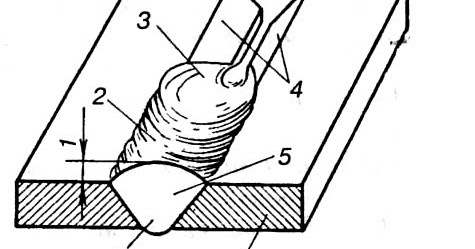
In welding, a bevel helps create a weld pool between two thick metal sheets, overcoming the limitations of maximum weld penetration thickness. This ensures high-quality connections. Moreover, bevel cutting on a laser machine allows for smoothing sharp edges. This is not just part of the finishing process but a critical final step. Laser beveling is significantly faster than traditional mechanical methods, enabling efficient removal of burrs and improving processing quality.
Laser Countersinking: Countersinking involves creating a conical depression for screws or rivets. Traditionally, this required moving the workpiece from the cutting machine to another, such as a drill press. With Bevel Cutting, this process can be performed directly on the laser machine, eliminating the need for additional equipment.

3. Cutting Non-Standard Shapes: With Bevel Cutting technology, the possibilities of laser cutting are limited only by the designer’s imagination. The additional tilt axis on the machine allows for complex cutting operations, such as bevels and conical cuts, which are impossible with standard lasers.

Key Benefits of Bevel Cutting Technology
Bevel Cutting not only simplifies production processes but also minimizes time lost due to multiple processing stages and workpiece transfers between various stations and machines. This increases overall productivity while reducing the need for multiple types of equipment.
- Speed and Efficiency: Automatic edge preparation for welding seams reduces the number of manual operations.
- Multi-functionality: One machine replaces several: cutter, milling machine, and drill press are replaced by a single laser machine.
- Fewer Errors: Reducing manual operations lowers the risk of human errors.
- Reduced Tool Costs: Using a laser instead of mechanical tools eliminates the issue of wear and tear.
Comparison: Bevel Cutting vs. Traditional Approach
| Criterion | Traditional Approach | Bevel Cutting |
|---|---|---|
| Number of Machines | 3+ (cutter, milling machine, drill press) | 1 laser machine |
| Processing Speed | Slow | Fast |
| Error Risk | High | Low |
| Tool Costs | High (tool wear) | Low (no physical wear) |
Examples of Bevel Cutting on ARAMIS Machines

Why Transition to Bevel Cutting?
- Time and Cost Savings: Performing all operations on a single machine reduces time and eliminates the need for additional equipment and skilled personnel.
- Enhanced Quality: Automatic bevel creation ensures better edge preparation for welding, resulting in stronger joints.
- Greater Flexibility: Easy programming and the ability to cut complex shapes make this technology accessible even for small businesses.
Conclusion
The metalworking industry is seeing innovative solutions that simplify processes and increase efficiency. Laser bevel cutting technology consolidates multiple stages of metalworking into a single operation. It reduces the need for additional equipment, shortens processing time, and boosts profitability and efficiency for businesses.
Ready to say goodbye to manual beveling and welding seam preparation? Our experts are here to help you integrate this cutting-edge technology into your production line. Contact us today!

Why Is Now a Good Time to Buy Laser Machines from a Ukrainian Manufacturer? Despite the challenges of wartime, the Ukrainian metalworking industry continues to grow. More companies that previously outsourced metal processing are now setting up their own production. This creates a demand for high-quality equipment backed by guarantees and service support. Purchasing directly […]

Usually the machine breaks just when you need it the most Imagine: your machines stop just when you need them most. It’s a scenario we’ve all faced. Many manufacturing companies rely on systems that have faithfully served them for many years. However, even a well-maintained system will wear out, primarily in its mechanical components. […]
Дякую за корисну статтю. Відкрив для себе цікаві нюанси, на які раніше не звертав уваги