

Laser machines from China: not getting any better come at once
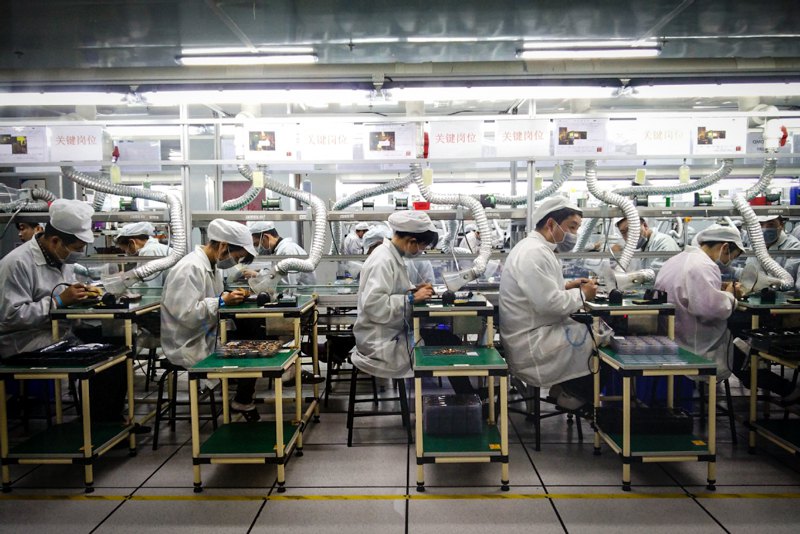
- The reasons why Chinese metal cutting machines are so attractive for Ukrainian manufacturers.
- Low cost:
Where is it better to buy laser metalworking machines – in China or from local producers? Ukrainian companies should consider this decision carefully, especially due to geopolitical uncertainties and the risks associated with importing during the war time.
This article reveals the details of making the decision to purchase laser machines, considering the advantages and disadvantages of Chinese equipment, as well as the pros and cons of the domestic machines.
In addition, this article aims to provide comprehensive information for manufacturers to help them make the optimum decision on purchasing laser metal-cutting machines in the context of the problems caused by the war in Ukraine.
The reasons why Chinese metal cutting machines are so attractive for Ukrainian manufacturers.

Relatively low price is the main advantage of Chinese laser machines. Besides, manufacturers are often attracted by the wide assortment of products and the opportunity to save money on the initial cost of the equipment.
Low cost:
Machines from China are less expensive and potential buyers can afford purchasing several units for the price of one of the western alternatives. This can seem advantageous for businesses that want to save money or don't have free available funds to buy alternative equipment.

“People buy Chinese machines because they are cheaper. There are no other reasons. In some cases you can buy 3 Chinese machines for the price of 1 European machine for the same purpose. However, the further costs of operating and repairing them can offset the entire benefit of the purchase.”
Wide assortment to choose from and savings:
Chinese machines offer a wide range of models to suit different needs and capabilities. And the money saved can be invested in other important production processes. They make it possible to optimize resources, especially for those who are just entering the laser cutting industry.
So, relatively low initial investment in the purchase of Chinese laser systems is certainly very attractive to Ukrainian manufacturers. But it is important to understand the risks and limitations that may arise in case of buying machines from China, let’s discuss that a bit later.
Disadvantages of buying from China
In spite of the fact that Chinese machines can be an economic solution, they have their own drawbacks and risks, especially for Ukrainian manufacturers.
 Quality:
One of the main problems with Chinese machines is quality inconsistence. Cases of varying quality of components, durability and reliability problems question the longevity of these machines in harsh production environments.
What risks are you taking by purchasing a laser system with low-quality components?
Basically: the cheaper = the more dangerous, the less durable, and the higher the maintenance costs.
One needs cheap components for making a cheap product. A cheap machine just can’t have expensive imported motors, software, CNC, laser, guiderails or electronics! All of these are locally made Chinese components, usually from the lowest segment. No Chinese manufacturer of cheap equipment can afford to import German lasers, Japanese motors or French electronic components, as this will result in a rapid increase in the cost of the product, and consequently reduce such manufacturer’s competitiveness in the price race against other Chinese manufacturers. Which accordingly affects the overall quality of the finished machine.
In general: the cheaper = the more dangerous, the less durable, and the higher the maintenance costs.
Insufficient quality of the motion system components leads to poor cutting precision and repeatability, as well as rapid wear of components.
The cause of potential problems can also be hidden in the laser source as well
Buying a Chinese metal cutting machine is related with the risk of getting equipment with defective components or ones that don’t comply with the declared performance parameters.
This happens due to the fact that the manufacturing industry in China is characterized by mass production of standard parts and elements, the quality control of which is performed at a very low level. Approximately only 1 from every 100 unit of the finished batch is checked on the assembly line, the other 99 remain unchecked with the hope that everything is fine as it is.
However, a laser source, for instance, is a complex product that requires high-quality components and careful inspection of the finished product. Quality control of the laser source is usually performed at specially equipped laser laboratories.
But the equipment for such a laboratory and labor remuneration of qualified workers are quite expensive. Therefore, manufacturers of cheap machines usually avoid this process, trying to offer the cheapest machine in terms of initial cost on the market.
In general, for Chinese manufacturers who export their machines to distant countries, this risk is justified, since it is almost impossible to see the non-compliance between the declared parameters and the actual ones at the initial stage of using a machine. However, over time, the functionality of an unsuitable source drops significantly, the speed slows down, and the precision and repeatability of cutting deteriorate.
You have found a remarkably cheap Chinese laser? Perhaps this device is so cheap because it has a laser source of unsatisfactory quality.
You have found a remarkably cheap Chinese laser? Perhaps this device is so cheap because it has a laser source of unsatisfactory quality. After all, a high-quality European, American or Japanese laser source costs more than the entire Chinese machine as a whole!
 Unreliable after-sales service and lack of spare parts:
Reliable after-sales service, technical support, availability of spare parts and related consumables – these are the factors that experienced manufacturers look for almost first and foremost when choosing a supplier of industrial equipment.
A laser metalworking machine is a complex technological solution, not a simple toaster, that’s why even experienced operators often need to contact the manufacturer’s technical support to select the right modes or eliminate malfunctions in operation.
If there is no one who can promptly resolve such issues – then the work is suspended.
Getting remote after-sale support from Chinese suppliers often turns out to be problematic. Language barriers, time zone differences and inefficient means of communication can make it difficult to solve the problems quickly.
Language barriers, time zone differences and inefficient means of communication can make it difficult to solve the problems quickly.
Even if you buy a machine from a system dealer of a Chinese manufacturer, a question arises about availability of a qualified service and technical support department, as well as the availability of spare parts and consumables in stock.
Another issue is that Chinese manufacturers often change components, so it often becomes impossible to find spare parts for the machine after half a year, because the manufacturer does not have them any more, and those that are available are not suitable for your machine.
For now, the problem of skilled technicians availability is very topical, especially under martial law, when experienced workers can be mobilized to the army at any moment. At the same time, training of new specialists may become virtually impossible, as traveling abroad to the manufacturer’s station is prohibited by the law, and the manufacturer’s representatives also often refuse to come to Ukraine, because of the risks associated with the war.
So before buying a Chinese machine, ask yourself what you will do and who you will address in the following cases:
- If the machine arrives in a defective condition?
- If the laser source or cutting head fails?
- If there are problems with the software updates?
- If there are CNC malfunctions?
- If you have any questions about setting up of cutting modes?
- If spare parts are needed, etc.
For Ukrainian manufacturers, this limited access to the service support can significantly disrupt operations and maintenance schedules.
Lack of personnel training centers

However, operator’s insufficient knowledge can lead to improper use of the machine, associated high defection rates, as well as failure of the machine itself.
No matter how intuitive the software is, operators need to be well trained and have access to a knowledge base to select optimal modes and ensure correct operation.
Usually, when buying machines in China, there are no clauses in contracts that envisage training for the customer’s employees at all. Even if training is envisaged, it takes place online, without the opportunity to apply the acquired theoretical basis in practice under the guidance of a qualified specialist.
Besides, training materials are mainly unavailable in Ukrainian or Russian and contain only a basic level of controlling the machine at the level of “turn on, turn off, press this button”…. Unfortunately, high-quality training for understanding of the cutting technology, metal properties, selection of modes, possible errors, their causes and methods of trouble-shooting are usually not provided either by Chinese suppliers or their regional representatives.
 Risks related with documents falsification:
CE certification serves as a kind of proof of compliance with strict safety and quality standards. However, for the sake of economy, some Chinese suppliers may provide false or incomplete documents, which makes their machines’ legitimacy doubtful. Incomplete or fake certificates create potential legal and production risks for Ukrainian manufacturers.
by means of the CE mark, the manufacturer guarantees that the device is reliably protected in accordance with current legislation (Prods Security Act ProdSG). Accordingly, the CE mark is subsidized by the fact that all standards and guidelines, such as the Machinery Directive or the EMC Directive, have been taken into account in course of the product development so that the laser is safe during the product life cycle: installation, operation, maintenance, repair and disposal.
If you use the laser for commercial purposes, it is important that the laser has a genuine CE certificate. If the documents are fake, incomplete or with errors, it means that there is no conformity procedure, no risk assessment. Often a Chinese laser has a kind of CE certificate. What appears visually convincing is really irrelevant as it does not replace the required declaration of conformity.
Problems with customs clearance
Usually the decision to buy a machine directly from the manufacturer is motivated by an attractive price quoted on the company’s website. It can be up to twice lower compared to an authorized dealer’s price, which usually encourages the buyer to purchase independently.
If you decide to order a laser machine directly from a manufacturer in China, make sure you calculate the associated costs correctly.
But buyers often underestimate the associated costs incurred during machine loading and unloading, delivery, customs clearance, commissioning and after-sales servicing.
Let’s look at a scenario where high shipping costs have already been paid, but nothing happens: you are waiting for your Chinese laser in vain. Every laser sent to Ukraine must pass through the customs control. Customs office must check such devices, including the necessary import and other documents. Did you know that?
Importing a laser machine on your own? Watch out for customs control!

In such a case, for verification of the machine’s conformity you will have to provide additional information about the Chinese laser, such as technical drawings, wiring diagrams, and EMC certificates.This is because conformity is the responsibility of the importer (from the legal point of view it is more correct to word it as the “owner”) and not the manufacturer. All of this can take a lot of time, during which not only your personnel of the supply chain and international operations departments will be busy, but you will also have to pay for the machine storage at the customs office, and you won’t be able to use your machine as intended. Besides, it may also happen that at a certain point your purchase will simply go back to the manufacturer because it will be impossible to provide proof of conformity.
Local production: advantages and limitations
Take advantage of the products produced locally:
 Guarantee of quality and reliability:
Giving preference to local producers provides a higher level of quality assurance and adherence to standardized regulations. Ukrainian manufacturers obtain confidence in the reliability and stability of equipment.
Better communication and service:
Direct and efficient communication with local producers facilitates better understanding and response to specific needs. Accessible after-sales support, rapid troubleshooting and availability of spare parts contribute to more predictability of production and continuous operation.
Personnel training centers:
Local producers usually have the capacity to provide training for machine operators and technologists, both at the theoretical and practical levels. In addition, documentation and training literature are available in Ukrainian.
Grant programs of financing from the government:
Trying to support local manufacturers, the state establishes various grant programs for the purchase of equipment from national manufacturers. Such programs can substantially simplify the financing process and reduce the initial cost of equipment.
Also there are international grant programs for purchasing of production equipment. However, they usually do not envisage the possibility to purchase Chinese equipment because of the significant risks in the quality and in the delivery process of the equipment.
Limitations of local production:
Higher initial costs:
While local production ensures better quality, it is often associated with higher initial costs compared to Chinese alternatives. Preliminary investments may become a disincentive for some Ukrainian manufacturers, affecting their budget allocation.
Limited parameters:
Local markets may offer a narrower range of options in terms of equipment variety compared to the wide range available from Chinese suppliers. This choice limitation can create problems for manufacturers looking for multifunctional equipment.
Impact of the situation in Ukraine on equipment imports
Situation in Ukraine increases risks associated with importing from China. Delayed delivery periods, customs clearance difficulties and geopolitical uncertainties further complicate the purchasing process. Manufacturers encounter extended delivery period, which disrupts production schedules.

“Buying from China is always related with higher risks, takes more time and effort. Transportation and customs duties can be very costly.”
 Problems with delivery and customs:
The war in Ukraine has led to enhancement of customs inspections, resulting in delays of customs clearance for imported equipment. Enhanced security measures and control at the borders result in protraction of the time waiting for the needed equipment to enter the country.
Absence of direct sea and air links makes logistics routes through third countries longer and includes the need to use additional carriers, pay for their work and follow their regulations and laws.< /p>
The same concerns the processes of returning the equipment if it arrives in a wrong condition or if it needs to be sent for repair.
The process of returning defective equipment includes the following steps:
- agreement with the manufacturer to return the equipment or send it for repair
- customs clearance
- delivery to the point of transportation from Europe to China
- delivery to China itself (e.g. by sea it will take at least 50 days one way)
- waiting for the repair (unknown period of time)
- the way back to Ukraine with all the same procedures as listed in pp.1-5.
“First, you just don’t want to spend days explaining to some Chinese guy that your machine doesn’t work at all.
You will then have the problem of sending the machine back and waiting for a refund or replacement.
It may matter very little for a hobby, but if you need the equipment for business, losing a machine for six months to a year instead of a few weeks can have big consequences.”
Thus, the process of equipment return, repair and the way back to Ukraine may take from 0.5 to 1 year, which usually will certainly result in production downtime and disruption of delivery of finished products.
Instability of the delivery cost:
Geopolitical tensions and the consequences of the war lead to unpredictable fluctuations in the cost of delivery: from time to time the cost can either decrease slightly or boost several-fold unexpectedly.
Besides, uncertainty about trade routes and the imposition of duties increase overall costs, affecting the final cost of imported equipment.
Problems with the specialists’ fieldtrips for maintenance.

At the same time, currently there are almost no system dealers of Chinese manufacturers in Ukraine, which have a high-quality technological base and a staff of qualified employees. Most of them have problems with their own skilled staff, mobilization and the possibility to move freely around the country to solve clients’ problems, not to mention the lack of facilities for routine repairs and maintenance. And ordering of spare parts for repairs from China entails a large financial burden and long-lasting delivery periods.
This situation makes it virtually impossible to perform timely equipment maintenance and provide technical support services.
This in turn has a significant impact on the smooth operation of the machines and on their overall lifetime.
Taking these shortcomings into account, Ukrainian manufacturers should be cautious in their decisions, realizing that economic profitability requires proper assessment of risks and challenges associated with cooperation with China in the modern regional and global environment.
Conclusions
Purchasing of laser machines often puts Ukrainian enterprises in a dilemma: the attractiveness of cheap machines imported from China compared to the reliability of local production. Assessment of these options in the context of the ongoing conflict in Ukraine needs a careful balancing of different aspects.
Assessment of options:
Imports from China | Affordable pricing and variety of Chinese machines attract customers. However, there are risks such as quality issues, unreliable after-sales service, lack of components and documentation. |
Local production | Making the choice in favor of local manufacturers guarantees quality, convenient communication and reliable after-sales service. However, the relatively high initial costs and possible assortment limitations compared to the Chinese market constitute certain challenges. |
Navigating through geopolitical uncertainties:
The war in Ukraine substantially impacts import and export processes. Delays, rising costs and geopolitical uncertainty are disrupting supply chains, urging buyers to carefully evaluate their purchasing strategies.
The way Forward:
Ukrainian manufacturers should carefully consider the pros and cons of each procurement option. Prioritizing the quality, warranties, compliance with international standards and adaptability to geopolitical risks, they can determine a sustainable way forward in these challenging times.
In this context, businesses need to make well-weighed strategic decisions, staying focused on long-term sustainability rather than immediate economic benefits. The way to successful strategies goes through careful assessment of geopolitical risks and quality warranties so that Ukrainian manufacturers can move forward with confidence in an unpredictable environment.
These articles might be of interest for you

Usually the machine breaks just when you need it the most Imagine: your machines stop just when you need them most. It’s a scenario we’ve all faced. Many manufacturing companies rely on systems that have faithfully served them for many years. However, even a well-maintained system will wear out, primarily in its mechanical components. […]

1. Selection of equipment without proper research. Problem: Buying a laser machine is a big investment, and you don’t want to waste money on equipment that doesn’t meet your needs. Solutions: Do thorough market research, available technologies, and ways to solve your needs. Compare them and choose the technology that best suits your production needs. […]


The reasons why Chinese metal cutting machines are so attractive for Ukrainian manufacturers. Relatively low price is the main advantage of Chinese laser machines. Besides, manufacturers are often attracted by the wide assortment of products and the opportunity to save money on the initial cost of the equipment. Low cost: Machines from China are […]

This machine features: Ytterbium fiber laser Linear motors Suitable for cutting of metal in large amounts. Vector speed up to 250 m/min Cutting speed up to 60 m/min Accuracy of positioning and repeatability: 0.01 mm Laser source power: 2-6 kW 4 monitoring cameras.

What is laser cutting of metals? Metal laser cutting is a process where a laser beam is applied to cut metal parts to a specific size and shape. This method of metal processing is the most precise and efficient compared to other cutting methods, such as plasma cutting or gas cutting.

In case of industrial equipment, the decision to purchase used equipment requires careful consideration. This is especially true for used laser cutting machines, a technological asset that can be a blessing or a curse depending on the specific circumstances.

Advantages of ordering metal cutting services Provision of metal cutting services by a professional contractor can provide many advantages for the business. Here are some of the main ones: 1. Cost effectiveness: Outsourcing can be more cost-effective than purchasing of in-house equipment, especially for companies with small production volumes. It eliminates the need for expensive […]

How to choose a laser machine for metal cutting? Owners of industrial enterprises for the manufacture of metal products are paying increasingly careful attention to laser machines for metal cutting, which feature versatility, reliability and high precision. That goes without saying: when purchasing such equipment, the question arises quite naturally – what characteristics of the […]

Understanding the basics of manual laser welding systems Before going deeper into the specificity of choosing a manual laser welding system, it is important to understand the basics of this technology. A manual laser welding system usually consists of: ✓ laser source, ✓ optical welding manipulator, ✓ cooling system ✓ control unit. Laser source creates a concentrated energy flow, […]

Metalworking technologies have been evolving for several centuries and offer a wide range of options for solving the issue. Today, the most popular options are laser and plasma cutting. Let’s take a look at which method is better. To be honest, this question is not a valid one, as each type of machine tool is […]